EU's New Trade Crackdown on China: How It Will Affect Your Wallet, Inflation and Everyday Cost?
Core Takeaway: The EU's stricter trade rules and incoming tariffs on Chinese imports will raise everyday consumer prices, delay inflation relief, and keep interest rates elevated for longer. Proactive budget planning and smart consumption adjustments can help ordinary households in both the EU and emerging markets protect their finances from the impact.
On 18 June 2026, European Union leaders gathered in Brussels to debate strategies for rebalancing trade ties with China, due to:
mounting export pressure from China
critical rare-earth dependencies
widespread concerns over state subsidies and supply chain vulnerabilities
Moreover, the EU is expanding tariffs and quotas on Chinese imports, especially on electric vehicles and steel.
It sounds like news only for trade officials and manufacturing executives.
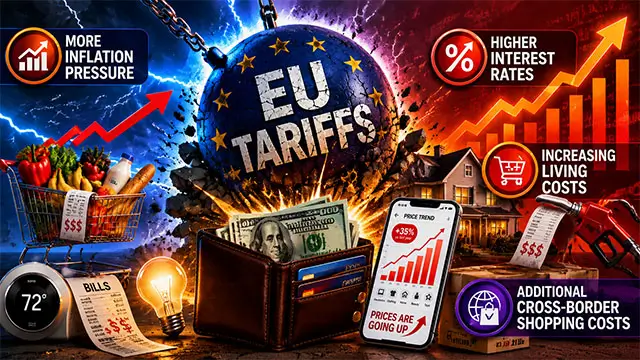
However, if you live in the EU, or in an emerging market like South Africa, Mexico, or Brazil, these new tariffs and import restrictions can directly affect:
- your monthly grocery and shopping bills
your mortgage and loan interest rates
your savings and investment returns
your cross-border shopping costs
overall inflation pressure
So, here comes the question:
What will actually get more expensive, and how to deal with it right now?
To answer these questions, this blog has explained the EU's new trade measures, analyzed its potential impacts, opportunities and risks, and provided some suggestions accordingly.
What Happened: Simple Explanation of The EU's New Trade Measures
The European Union has been rolling out a series of tighter trade policies aimed at what it calls "unfair competition" from subsidized Chinese industries, driven by a widening trade deficit that reached around €360 billion in 2025 and continued growing in the first quarter of 2026.
Here's what's already in effect and what's coming next:
Measures already in place
Electric vehicle anti-subsidy tariffs: Now formally in effect, with rates as high as 35.3%. Combined with base import duties, some Chinese EV models face total tariffs of over 45%.
Carbon Border Adjustment Mechanism (CBAM): Fully implemented in 2026, covering steel, cement, aluminum and other high-emission goods. It adds an effective 12%–20% cost to imported products based on their carbon footprint.
Measures on the way
New levy on cheap Chinese imports: Staring July 1, cheap purchases from China will be imposed a flat €3 customs duty on online purchases valued at €150 or less.
Why It Matters: 3 Direct Impacts on Your Daily Finances
Most coverage focuses on corporations and industrial supply chains. But the ripple effects reach ordinary households in very tangible ways.
1. More expensive goods, higher living costs
Increasing tariff can not only add more costs for importers but also be passed partially or fully to local shoppers.
The most directly affected categories include electric vehicles, large home appliances, digital accessories, home building materials and residential solar installations. Local competitors may raise prices once cheaper imports are no longer undercutting them, putting broader upward pressure on household spending.
2. Sticker inflation, higher interest rates
Import-driven price increases slow the pace of inflation falling back to target levels. That means the European Central Bank will be slower to cut interest rates.
For households, this brings about higher mortgage payments, costlier personal loans and tighter credit conditions for longer. For those in emerging markets, this also adds pressure to local interest rates and currency weakness.
3. Additional cross-border online shopping costs
The EU is also tightening duty-free rules for low-value parcels shipped directly from China.
Higher customs fees, VAT enforcement and compliance costs will erode the price advantage of shopping directly on international e-commerce platforms and add your shopping budget.
Two Sides: Potential Benefits and Clear Risks
Potential Opportunities
European domestic manufacturing may see a rebound, supporting local jobs and industrial employment.
Local brands may become more competitive in price, giving consumers more domestic options over time.
Possible Risks
- Escalating trade frictions could lead to retaliatory measures, driving up prices across more product categories.
- Higher market uncertainty will lead to more volatility in savings and investment accounts.
Since the incoming tariffs can bring about some impacts and risks, should we just sit by? Of course not, the next part points out the directions for you.
What You Can Do: 4 Actionable Steps to Protect Your Finances
You don't need to be overwhelmed overnight. Here are some practical measures to help you reduce the impacts.
1. Plan purchases around the policy timeline
For items you were already going to buy, it may be worth completing the purchase before scheduled price increases kick in. Avoid stockpiling non-essential items out of fear.
2. Build a small inflation buffer into your household budget
For categories with high import exposure, like home goods, electronics, clothing, budget for a 5%–15% price increase over the next 12 months. Prioritize essential spending and cut back on discretionary purchases first to protect your core living expenses.
3. Diversify your investments to reduce trade risk
Avoid overconcentrating your portfolio in sectors heavily dependent on Chinese supply chains. You can add modest exposure to defensive assets, European consumer staples and diversified supply-chain themed ETFs.
4. Shop smarter and explore alternative options
Look for products made in Eastern Europe, Southeast Asia or domestic manufacturers as alternatives. Local second-hand markets, discount outlets and refurbished goods can also help you save.
Final Thoughts
Tighter trade policy is likely to be a long-term trend, not a one-time event.
There's no need to panic, but a little advance planning for your spending and savings can go a long way toward smoothing out upcoming price shifts.
FAQ
FAQ 1: Will all Chinese products get more expensive in the EU?
No. The impact is concentrated in strategic categories such as steel, electric vehicles, solar panels and basic chemicals.
FAQ 2: Should I buy gold to hedge against trade tensions?
Gold can be a useful part of a diversified portfolio, but we do not recommend making a large, concentrated gold purchase.
FAQ 3: Are there cheaper alternatives to Chinese-made goods?
Yes. Alternatives from Southeast Asian, Eastern European or domestic manufacturers can be a choice. In the short term, however, these alternatives often differ in price, quality and product range.
Disclaimer
This article is for informational and educational purposes only and does not constitute financial, investment, tax, or legal advice. Trade policies and tariff rules are subject to frequent change, and actual impacts may vary by region, product category, and individual financial circumstances. Readers should consult a qualified professional before making any major purchasing, investment, or financial decisions.

Hi! I'm Aria — someone who loves sharing everyday randomness and has an obsession with AI.I like writing about funny little things in life — weird stuff I run into while traveling, or the cool (and not-so-cool) things I've discovered while messing around with AI tools. I'm all about finding the fun in the ordinary. Stick around for the stories I've picked up along the way, and feel free to share your own too!