Cheap GLP-1 Alternatives: Who Really Saves?
When I read about cheaper generic GLP-1 drugs arriving in India, I thought affordable weight-loss treatment was finally becoming a reality.
But in a Reddit discussion, people were still debating prescriptions, availability, and refrigerated delivery.
That made me wonder: If cheaper medications are entering the market, why is reliable treatment still so difficult to obtain?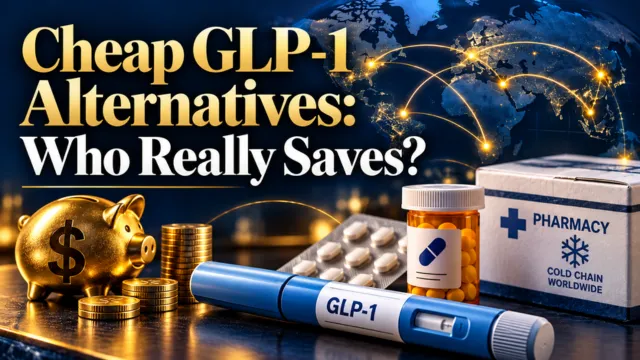
Why Doesn't a Lower Price Mean Better Access?
Before comparing treatments, I need to know whether I can legally obtain them and trust their quality. A lower price alone cannot answer either question.
Generic GLP-1 Drugs Are Cheaper, but Not Everywhere
In March 2026, Dr. Reddy's launched Obeda in India at ₹4,200 monthly, but its approval covered type 2 diabetes, not obesity.
Brazil's regulator also classified Ozivy as a new synthetic analogue rather than a generic.
These distinctions matter because a cheaper medicine available abroad isn't automatically an approved option where I live. Without local approval and reliable supply, international price cuts may change little for me.
Who Takes the Risk When Affordable Drugs Are Hard to Find?
If approved GLP-1 treatment remains inaccessible, locally compounded injections may seem attractive.
Compounding can address specific medical needs, but these products don't undergo the same premarket review as approved drugs. The FDA documented cases of patients injecting five to twenty times their intended semaglutide dose because of measurement errors.
This doesn't mean every compounded medication is defective. But when approved treatments are financially out of reach, patients may turn toward options requiring closer medical supervision.
I don't think affordability should come at the expense of reliable safeguards.
Am I Buying Treatment or Just a Cheaper Promise?
When GLP-1 drugs remain unaffordable, turning to older medications or supplements seems reasonable. The problem begins when products with different medical purposes are presented as interchangeable solutions.
When Saving Money Changes What I'm Treating
Metformin is inexpensive and useful for managing type 2 diabetes, but a 2024 meta-analysis found it reduced BMI by only 0.56 kg/m² more than placebo in adults without diabetes.
Orlistat, meanwhile, has an approved weight-management indication, although gastrointestinal side effects can be troublesome.
If my main concern were blood sugar control, metformin might make sense. If I needed obesity treatment, I'd consider medicines intended for that purpose.
Saving money makes little sense if I quietly change my treatment goal to justify a cheaper prescription.
Why Does Berberine Still Sell as a Natural Ozempic?
The appeal is understandable: an inexpensive capsule, no injections, and usually no prescription.
In one Reddit discussion, users described uncertain appetite benefits alongside nausea and other discomfort.
More importantly, a 2026 randomized trial involving 337 adults found average weight loss of 1.8 kg with berberine versus 1.9 kg with placebo after six months.
I understand why someone priced out of prescription treatment would try it. But the promise of an affordable solution appears stronger than the demonstrated weight-loss benefit.
Is Online Shopping Making Weight Loss Cheaper?
Online pharmacies and international marketplaces make cheaper products easier to find. Yet a convenient purchase doesn't guarantee a lower total cost or a better outcome.
The Price I See Isn't the Price I Pay
A first-order discount might look attractive until the medicine arrives improperly stored.
One Reddit buyer rejected a semaglutide delivery because it lacked cold storage. Other users reported paying an additional ₹150–₹250 for cold-chain packaging.
If I used a one-time coupon but needed to reorder after a storage problem, I might lose that discount, depending on the seller's refund policy. The replacement could cost more than buying from a reliable pharmacy initially.
Not every missing ice pack makes medication unusable; storage requirements depend on the specific product.
I'd check shipping conditions, refund policies, and full treatment costs before trusting the lowest advertised price.
Who Benefits When I Keep Searching for Alternatives?
Cross-border supplement shopping adds another complication. iHerb's India policy lists 30.98% in duties and taxes, while Amazon Global explains additional import charges.
But my bigger concern is what I receive for that money. Under U.S. rules, the FDA doesn't approve supplements for effectiveness before sale.
A retailer benefits when I complete a purchase. I benefit only if that purchase addresses my actual needs. Those aren't necessarily the same outcome.
I'd check locally approved treatments first, discuss suitable alternatives with a clinician, and compare total costs before buying.
I want cheaper healthcare—not simply more cheap products competing for my money.

Hi! I'm Aria — someone who loves sharing everyday randomness and has an obsession with AI.I like writing about funny little things in life — weird stuff I run into while traveling, or the cool (and not-so-cool) things I've discovered while messing around with AI tools. I'm all about finding the fun in the ordinary. Stick around for the stories I've picked up along the way, and feel free to share your own too!